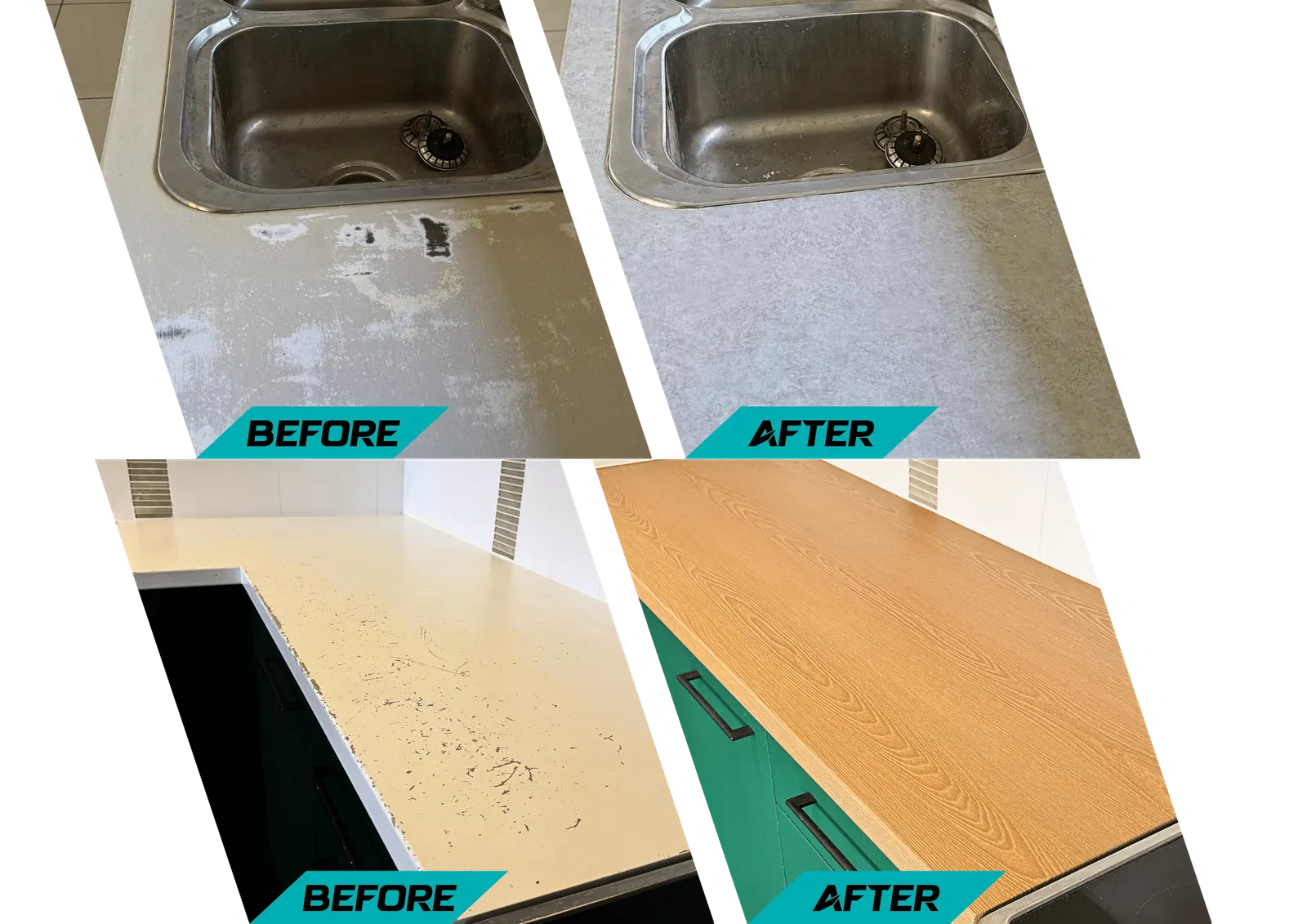
Painting kitchen cabinets has been popular for years, but homeowners are now discovering its limitations.
The reality of painting kitchen cabinet doors
While paint can refresh a kitchen visually, it comes with major downsides:
Cons of painting cabinets
Prone to chipping and scratching
Long drying and curing times
Strong fumes and mess
Brush marks or roller texture
Difficult to clean
Painted cabinets often start showing wear within 3 to 6 months, especially around handles and edges.
Why vinyl wrapping outperforms paint
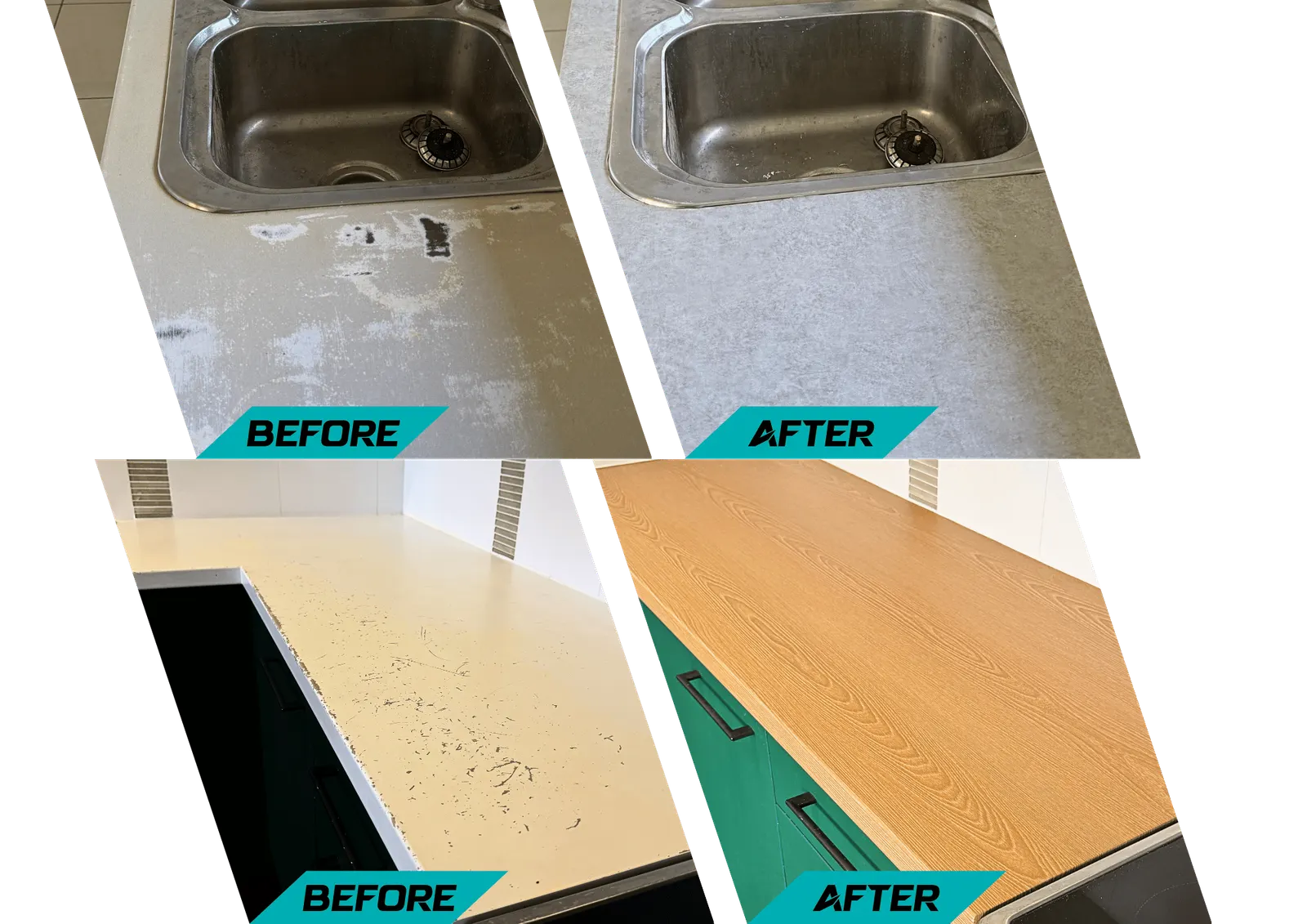
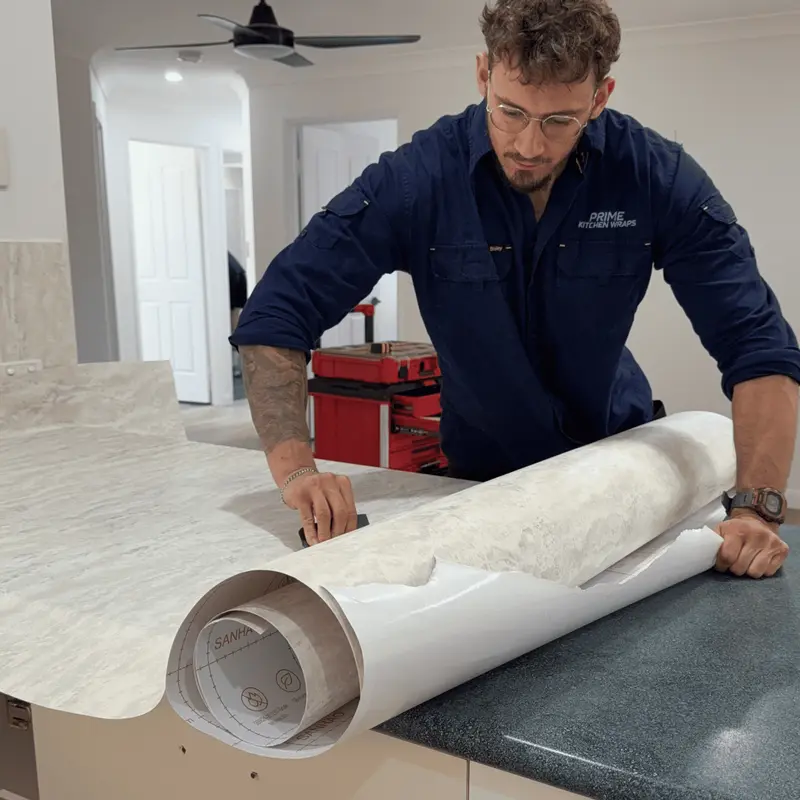
Vinyl wrapping uses heat-applied architectural films designed specifically for kitchens.
Key benefits:
Factory-smooth finish
Resistant to moisture, heat, and stains
No drying time
Easy to clean
Consistent colour and texture
Many homeowners choose wrapping after being disappointed by painted cabinets.
Paint vs vinyl wrapping comparison
| Feature | Paint | Vinyl Wrap |
|---|---|---|
| Finish quality | Variable | Factory-grade |
| Durability | Low, Medium | High |
| Downtime | 1 to 2 weeks | 2 days |
| Maintenance | High | Very low |
| Cost over time | Higher | Lower |
See the difference for yourself
Our transformations clearly show the difference between painted kitchens and professionally wrapped finishes.
View real Prime Kitchen Wraps results here:
https://www.primekitchenwraps.com.au/pages/completed-projects
The bottom line
Painting may seem cheaper initially, but vinyl wrapping delivers better durability, cleaner results, and longer-lasting value.
Paint vs vinyl: Side-by-side comparison
1) finish quality (the “does it look new?” factor)
Vinyl winsfor cabinetry.
Vinyl gives a consistent, uniform finish (especially in matte/satin textures).
Paint often shows brush/roller texture, edge build-up, and uneven sheen, especially around profiles and handle areas.
Also: vinyl results depend on surface condition and environment; dust/grease contamination is specifically called out as a cause of imperfections
2) durability & lifespan
Vinyl durability (realistic expectations)
Prime Kitchen Wraps’ guidance: vinyl can last ~5 to 7 years depending on material, including resistance to fading/cracking/delamination/yellowing.
Paint durability (typical kitchen reality)
Paint can chip at edges, wear around pulls, and stain on high-touch zones. Even “cabinet paint systems” often need careful curing and gentle use early on, and touch-ups become part of ownership.
Bottom line:vinyl is usually more forgiving in daily use ifprep + aftercare are respected
Cost table: What you pay for paint vs vinyl
Because every kitchen varies, here’s a transparent way to compare: materials + labour + downtime risk.
Paint cost components
Labour: sanding, priming, multiple coats, curing time
Materials: primer, topcoat system, fillers, masking, spray setup
Risk: chipping/touch-ups later, sheen inconsistency, edge wear
Vinyl wrap cost components
Materials: architectural vinyl + primers + edge treatment
Labour: removal/refit, wrapping, trimming, finishing
Optional scope add-ons: benchtops, internals, hinges, handles, repairs (common “includes” lists cover doors/drawers + panels/trims/kickplates, with internals often optional)
Before & after examples (from Prime Kitchen Wraps jobs)
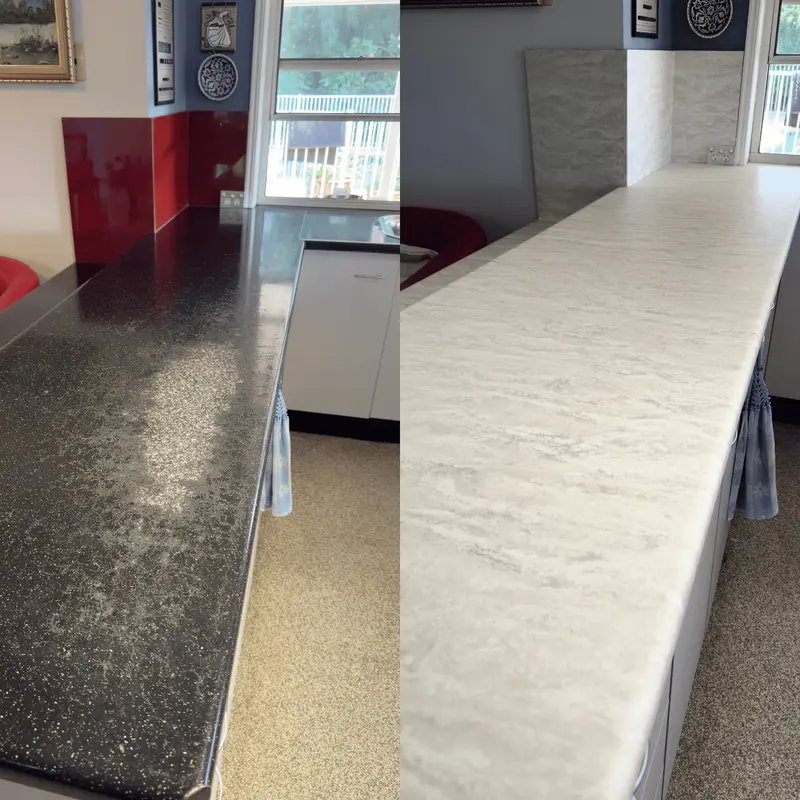
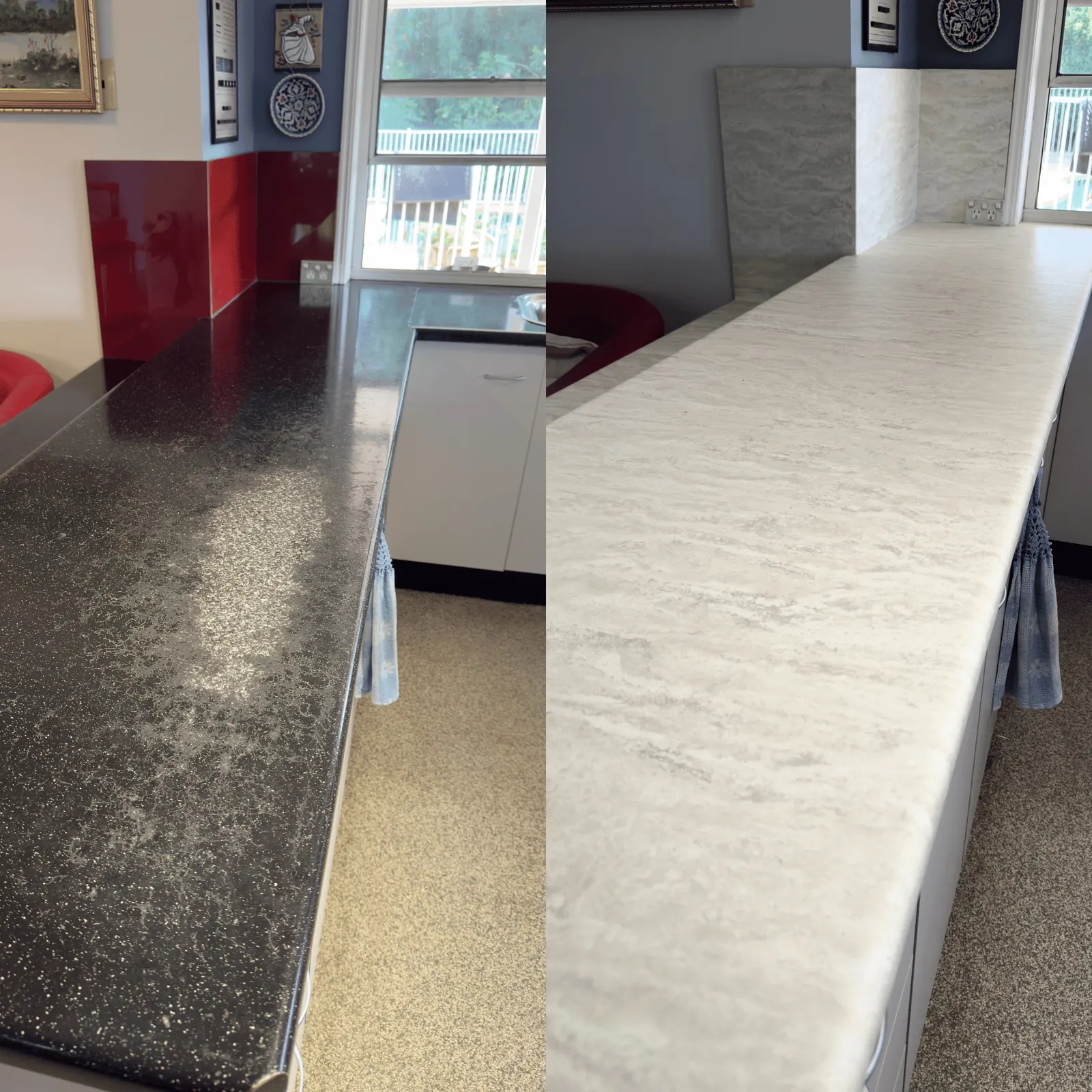
Example 1: Expoxy peeling after 3 weeks on a benchtop
Scope: benchtop
Value angle: a full “new kitchen” look without replacing joinery
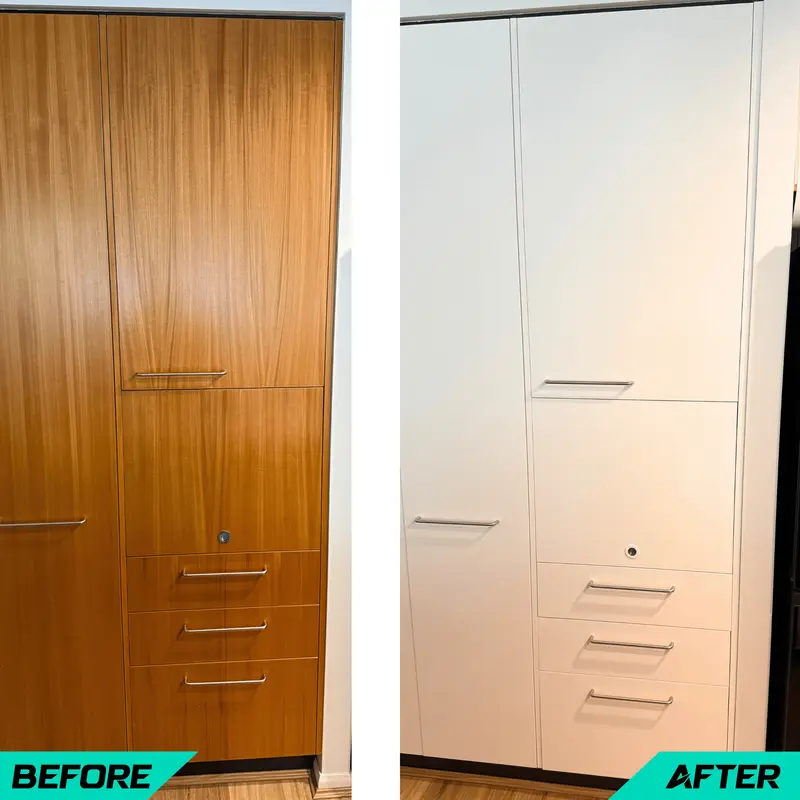
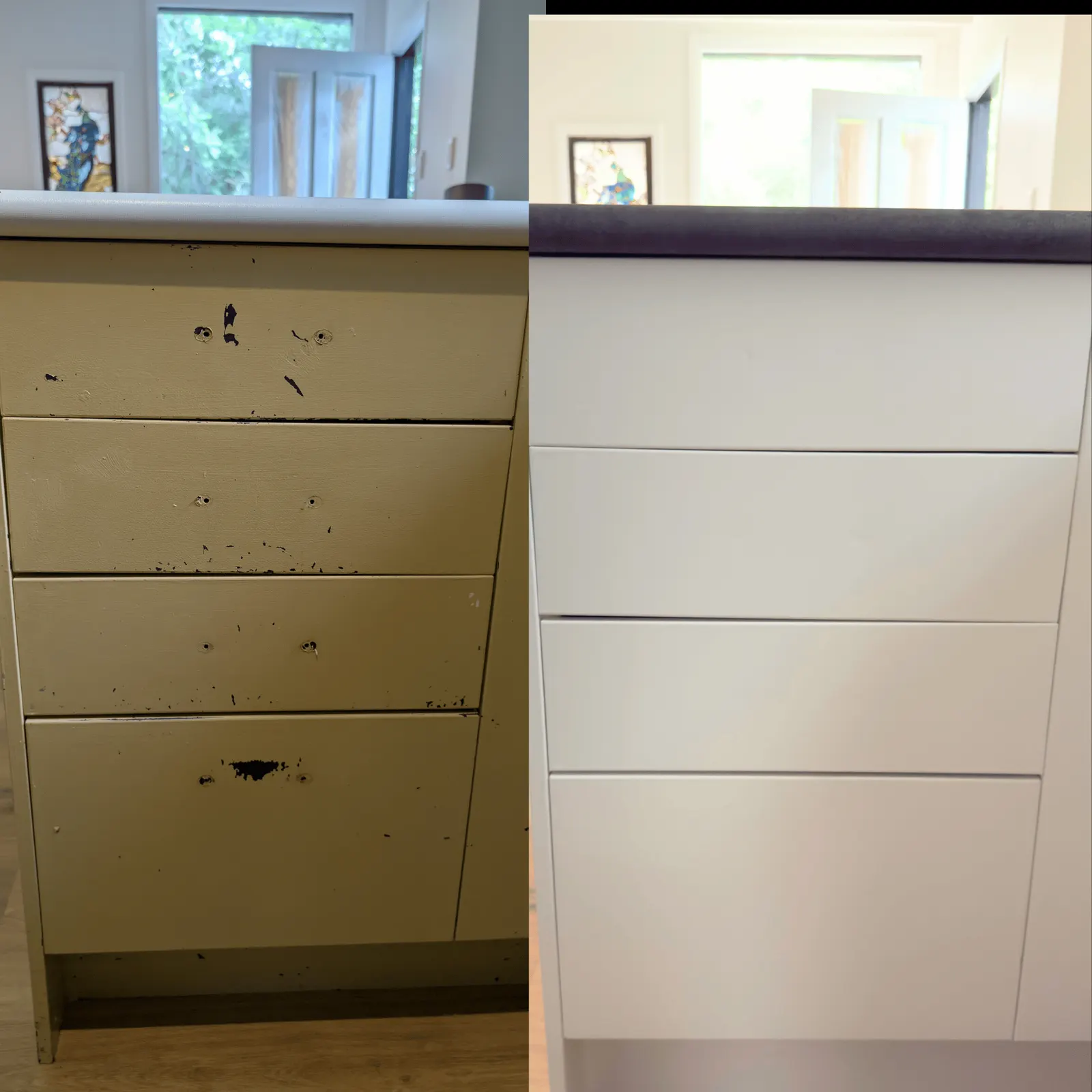
Example 2: Peeling paint and poor paint finish with bubbling.
Problem: A poor service from a painter left the customer with bubbling and peeling cabinet.
Scope: doors/drawers + benchtop
Customer experiences: What people typically love about vinyl
“It looks like a new kitchen.”(Because the finish is uniform and consistent.)
“Less mess than painting.”(No sanding dust through the home for days; no curing smell.)
“One coordinated look.”(Benchtops, doors, panels, kickplates can match.)
“We could choose a modern colour/texture.”(Matte whites, blacks, stone/concrete looks are common codes in recent jobs .)
Thinking about your own kitchen?
Count the doors, add a photo, and a tradesman comes back with a price. No obligation.